The Founder

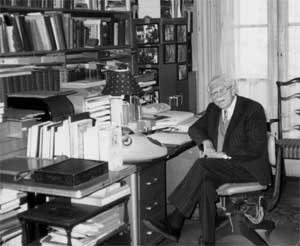
Dr. Kurt Leidecker, a scholar of comparative religion and chairman of the Thomas Jefferson Institute, presented his own worldwide vision in a letter to the editor in The Free Lance-Star:

The Thomas Jefferson Institute for the Study of Religious Freedom was established by a committee of the Fredericksburg Bicentennial Commission to commemorate a highly significant event in the annals of the United States. The Institute does not prejudge, condemn, accuse or engage in litigation. It fosters understanding of the world-wide problem of religious freedom and thus makes a positive contribution to church and state relationship and the ecumenical problems on the whole. By upholding, therefore, the kind of religious and intellectual freedom envisaged by Thomas Jefferson, George Mason, James Madison and several other men of the Revolution, Virginia can rightfully be proud.

He added the impact Jefferson’s statute had on the country and beyond:

I always say it was a beacon light for people in Europe. In those days they all took their religion seriously—so seriously they would go to war over it. When they came to this country they were relieved of this darkness the religious dogma. The whole attitude in America has contributed tremendously to religious peace in the world.

Throughout the years in a series or as occasional demands, the institute sponsored lectures, seminars, slide showings, movies, excursions, dinners, receptions and dramatic skits. Talks by cultural representatives of different countries illustrated the progress of religious freedom and toleration in their countries.

Several years after the institution’s founding, Dr. Leidecker was presented with an award for establishing the institute, which flourished under his leadership. He was praised in The Free Lance-Star:

To the Editor,

We would like to express deep appreciation to our City Council for the beautifully written and framed Resolution 83-13 which was recently presented to Dr. Kurt F. Leidecker, one of our most distinguished citizens. The resolution expressed gratitude to Dr. Leidecker for establishing in our beloved Fredericksburg, the Thomas Jefferson Institute for the Study of Religious Freedom, Inc. Membership in this institute, which has become worldwide, continues to grow.

Butler Robinson Franklin
Fall Hill

In its declaration, the institute summed up its mission by making the following statement: “The Institute will serve its purpose best if it has the support of all citizens who feel that the ideal for which it was established is not only a good and valid one, but needs constant re-affirmation and application in daily life by every member of the human race.”

Jefferson in Arabic

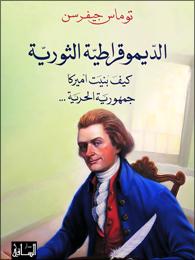
جيفرسون للمسلمين

(Arabic translation above: “Jefferson for Muslims”) The memoir of Thomas Jefferson was transcribed in Arabic to reach a new audience, especially the Muslim community. It has a powerful, brief introduction by prominent Arab intellectual Hazem Saghieh, a religious activist and editor of al-Hayat newspaper, which expresses admiration for Jefferson’s political thoughts. It is entitled in Arabic the equivalent of Revolutionary Democracy: How America became the Republic of Liberty.

One reviewer said, “It is beautiful for Lebanese and Arabs to be able to read passages from the texts composed by one of the founders of the United States of America and one of the authors of the Declaration of Independence. It is beautiful for Lebanese and Arabs to be able to read content that will provoke critical discussion, composed by Thomas Jefferson through various stages of his life and career, because texts such as these … are open to the concerns of politics, economy, and public culture . . .” 

A Prestigious Award

The Virginia Knights of Columbus received a prestigious national award for their involvement in a significant parade in Fredericksburg, specifically for the Religious Freedom Parade held in 2002.

National Service Award: The Fredericksburg Council 4034 was honored by the Supreme Council of the Knights of Columbus with the Service Program Award for Community Activity. This was the top national award for community service projects for the year 2002.

The Project: The award recognized the council’s leadership in organizing the annual Religious Freedom Day Parade and ceremony in Fredericksburg. This event commemorates the 1786 passage of the Virginia Statute for Religious Freedom, authored by Thomas Jefferson.

Significance: The 2002 parade was particularly notable as it occurred shortly after the September 11 terrorist attacks, focusing on national unity and the foundational American right to religious liberty.

Recommended Reads

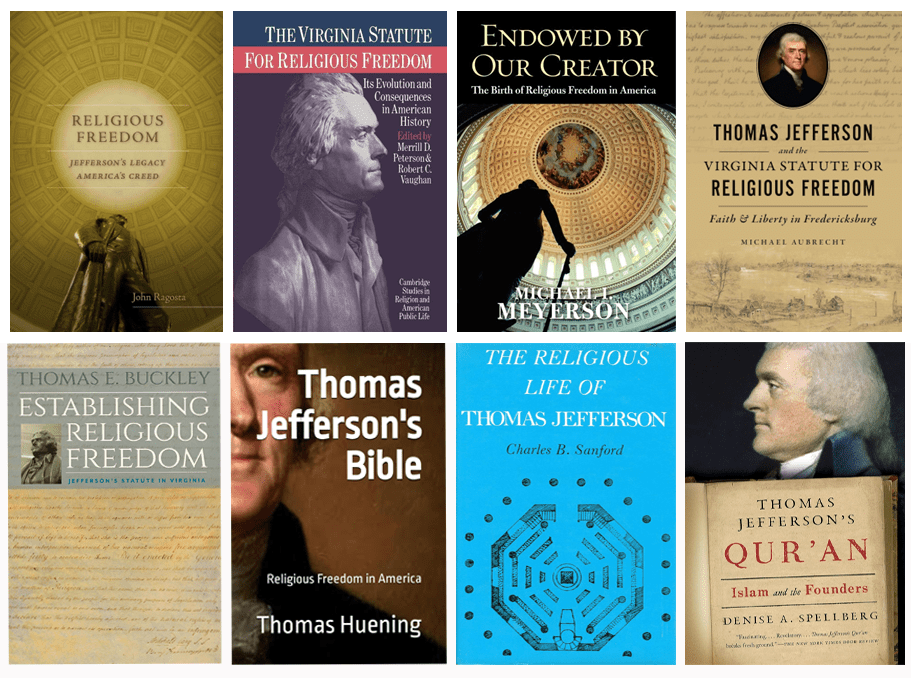
Here are some recommended books on Thomas Jefferson
and Religious Freedom with Amazon links below:

Religious Freedom: Jefferson’s Legacy, America’s Creed
The VA Statute for Religious Freedom: Its Evolution and Consequences
Endowed by Our Creator: The Birth of Religious Freedom in America
Thomas Jefferson and the Virginia Statute for Religious Freedom
Establishing Religious Freedom: Jefferson’s Statute in Virginia
Thomas Jefferson’s Bible: Religious Freedom in America
The Religious Life of Thomas Jefferson
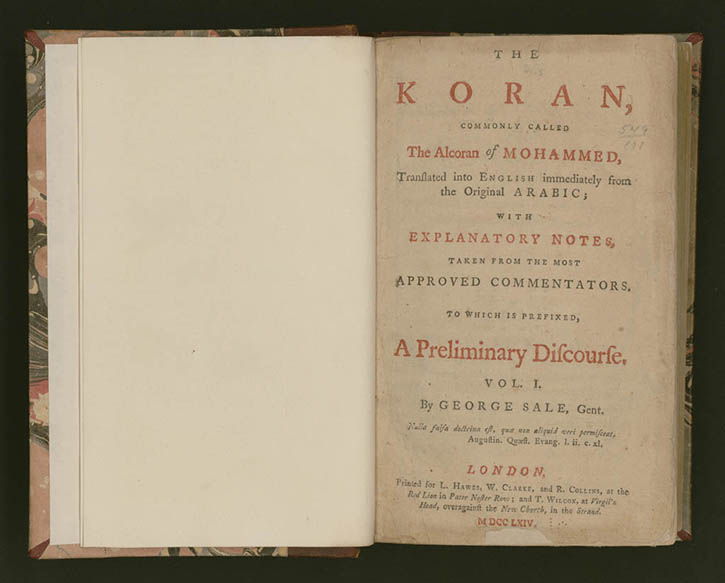
Thomas Jefferson’s Qur’an: Islam and the Founders

Separation of church and state

Contrary to popular belief, the term “separation of church and state” does not appear anywhere in the Virginia Statute for Religious Freedom. Thomas Jefferson’s reply to the Danbury Baptists Association in the State of Connecticut, was the first appearance of that statement:

Thomas Jefferson’s letter to the Danbury Baptist Association:

To messers. Nehemiah Dodge, Ephraim Robbins, & Stephen S. Nelson, a committee of the Danbury Baptist association in the state of Connecticut.

Gentlemen, The affectionate sentiments of esteem and approbation which you are so good as to express towards me, on behalf of the Danbury Baptist association, give me the highest satisfaction. My duties dictate a faithful and zealous pursuit of the interests of my constituents, & in proportion as they are ersuaded of my fidelity to those duties, the discharge of them becomes more and more pleasing. Believing with you that religion is a matter which lies solely between Man & his God, that he owes account to none other for his faith or his worship, that the legitimate powers of government reach actions only, & not opinions, I contemplate with sovereign reverence that act of the whole American people which declared that their legislature should ʺmake no law respecting an establishment of religion, or prohibiting the free exercise thereof,ʺ thus building a wall of separation between Church & State. Adhering to this expression of the supreme will of the nation in behalf of the rights of conscience, I shall see with sincere satisfaction the progress of those sentiments which tend to restore to man all his natural rights, convinced he has no natural right in opposition to his social duties. I reciprocate your kind prayers for the protection & blessing of the common father and creator of man, and tender you for yourselves & your religious association, assurances of my high respect & esteem.

Th: Jefferson
Jan. 1. 1802

A daughter’s memory

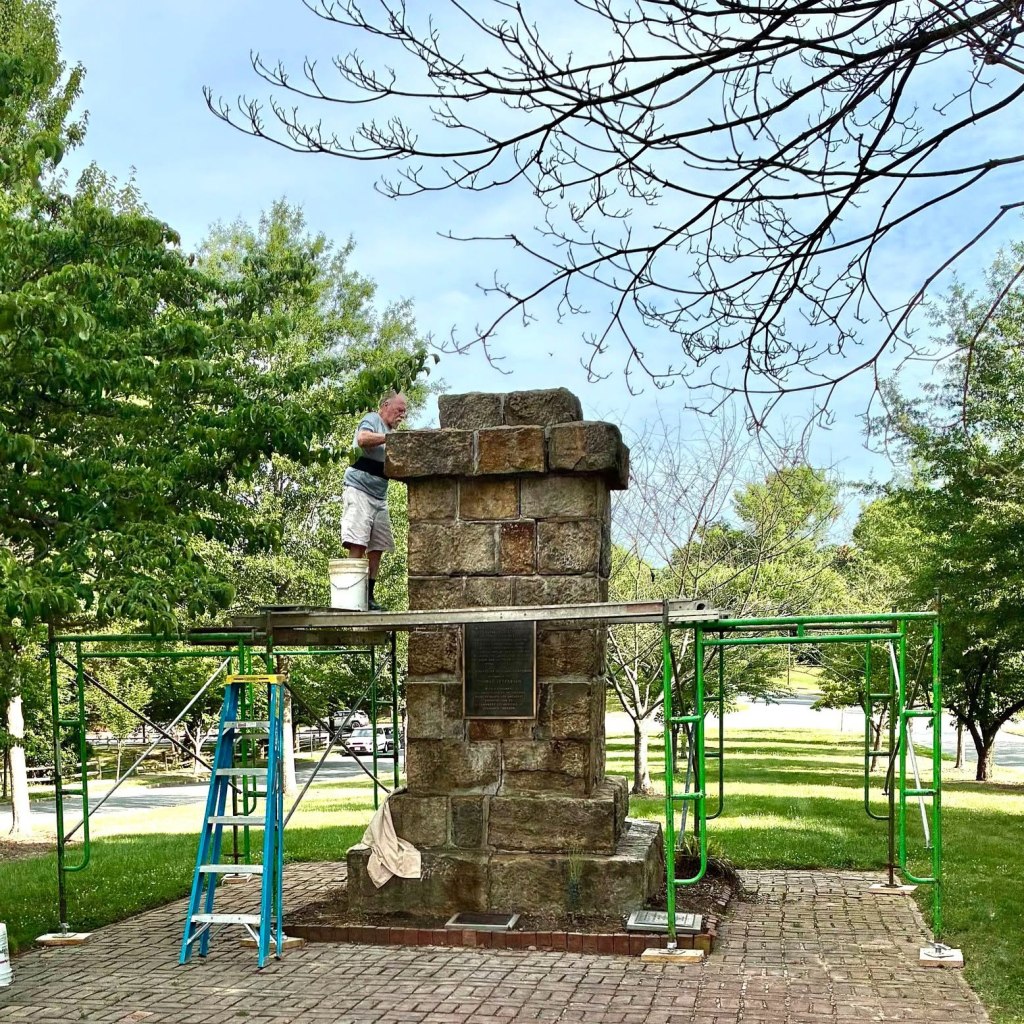
St Clair Brooks’ daughter, Marion, was still teaching Sunday School at Falmouth Baptist Church when the monument her father took her to see in 1932, when she was almost seven, was moved to Washington Avenue.

She told me: “He said it was important since it wasn’t just about freedom to worship as you choose, but that it wasn’t anyone else’s business”. I told Marion her father must have thought she was pretty smart. She replied “He did!” Marion Brooks Robinson died age 92, March 28, 2018.

Religious Freedom Day

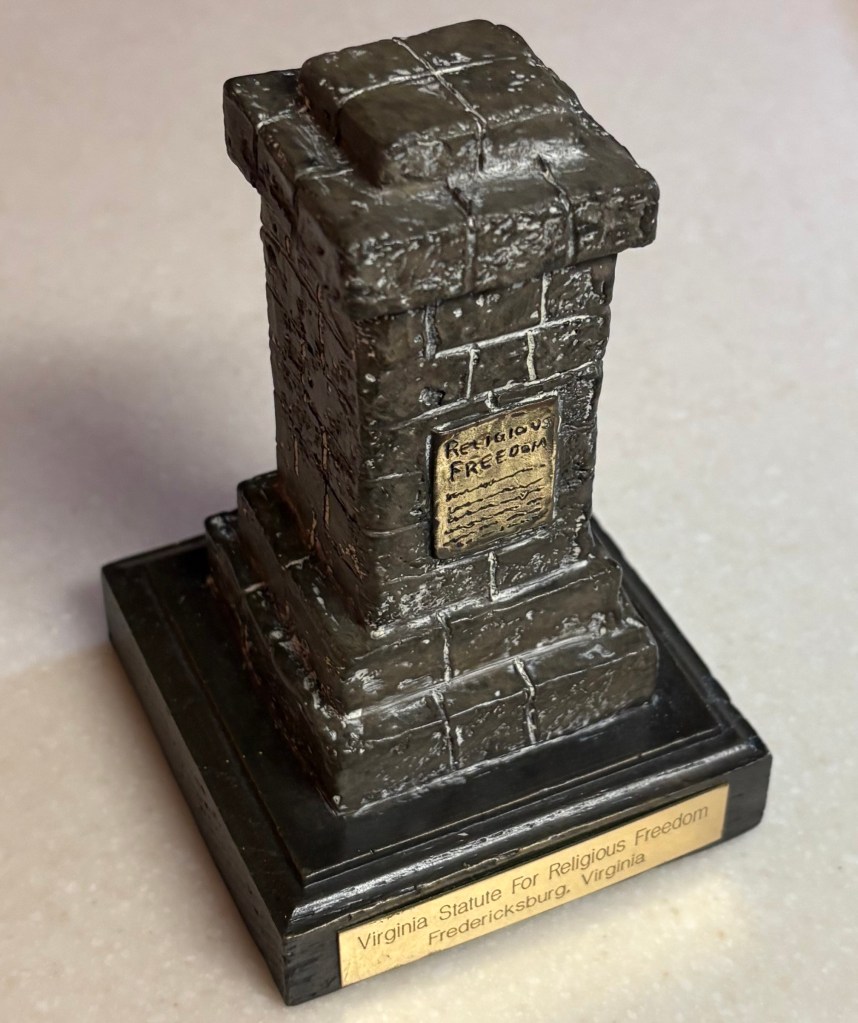
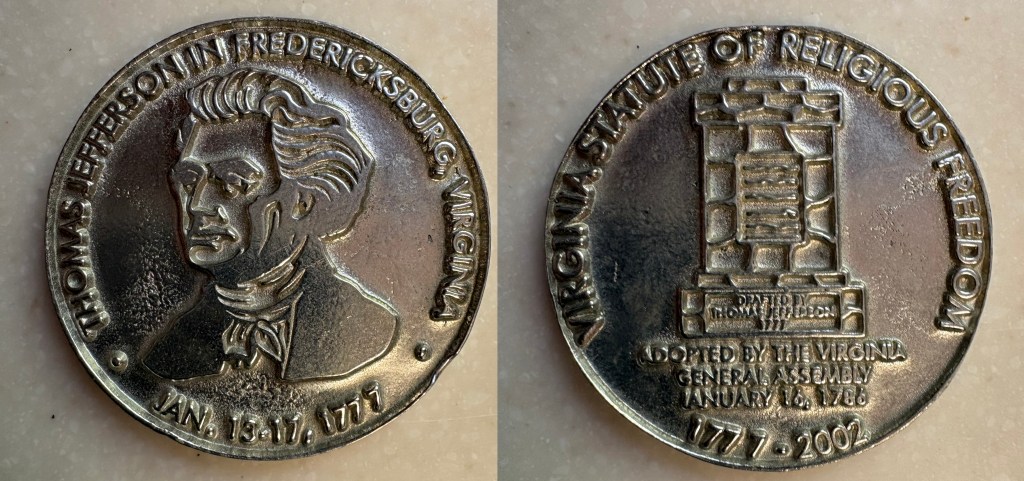
First established by the Thomas Jefferson Institute for the Study of Religious Freedom during the 1976 U.S. bicentennial and later assumed by the Knights of Columbus Rappahannock Assembly 1613, the city has come together to commemorate the bill and Jefferson’s role in preserving religious freedom in a ceremony for all faiths at the Religious Freedom Monument on Washington Avenue. The event is attended by more than one hundred participants. The appropriate ceremony includes a parade, the laying of a wreath, a benediction and a keynote speech.

Often, the parade is led by the Knights of Columbus, followed by groups such as members of the Church of Jesus Christ of Latter-day Saints, the Lutheran Church and members of the local Masonic lodge. Members of all faiths are invited to carry a banner identifying their affiliation and showing support for religious freedom.

The event symbolizes the healthy dialogue and relationships that exist between the city’s different religious groups. Each year, the mayor of Fredericksburg issues an official proclamation recognizing the statute.

Proclamation example:

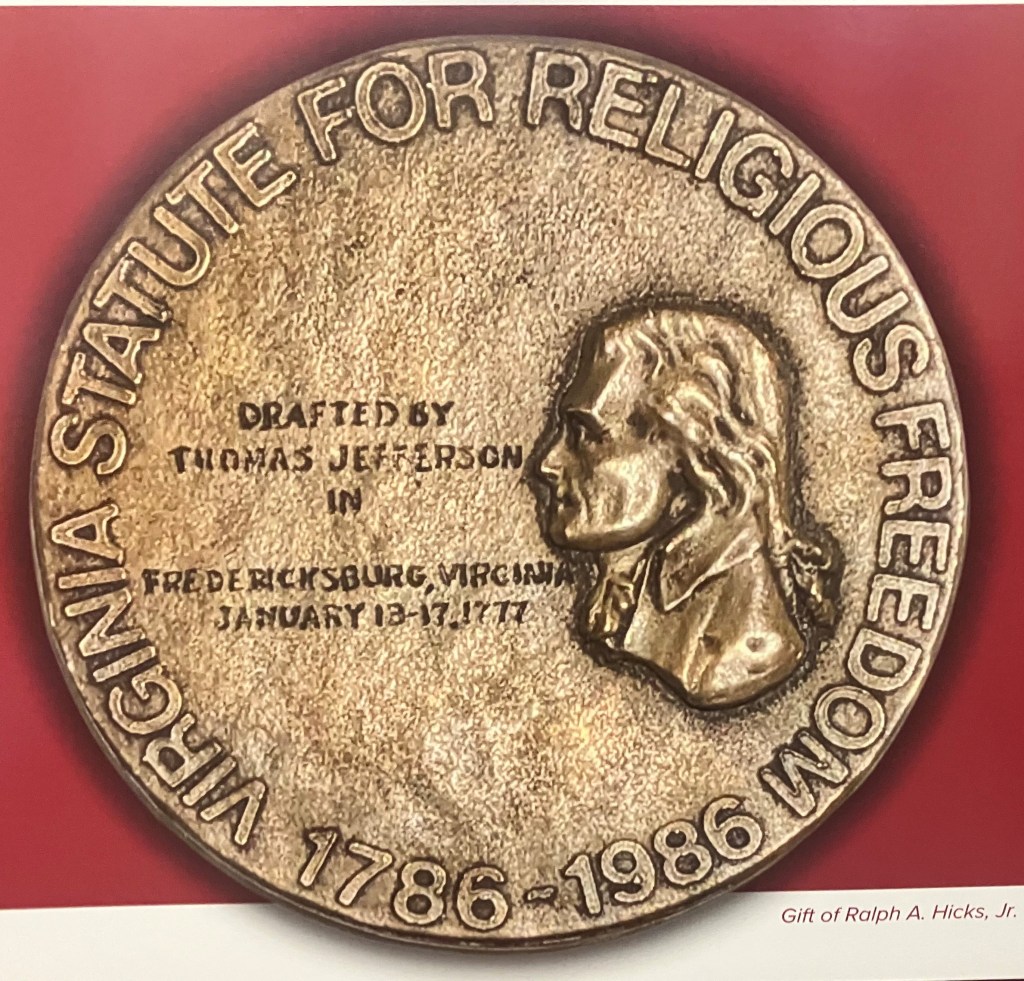
Whereas, It was in the Town of Fredericksburg, in the month of January 1777, that Thomas Jefferson first presented his Statute for Religious Freedom to a committee of revisors of the Laws of Virginia to make them conform in letter and spirit to the Declaration of Independence: and Whereas, the Statute was passed January 16, 1786, by the Virginia General Assembly and in March 1789 became the basis for the First Amendment to the Constitution of the United States of America: and Whereas, still in force, the Statute as the most liberal in the world, guarantees to every citizen freedom of belief and expression, and has since inspired millions of people everywhere: and Whereas, recognizing the importance of this document in view of the current secular and religious discussions, and carrying out the desire of its author that what he had done for the people be duly remembered. Now, therefore, I, Lawrence A. Davies, Mayor of the City of Fredericksburg, Virginia, do hereby proclaim this day as Religious Freedom Day.