Timeline of events

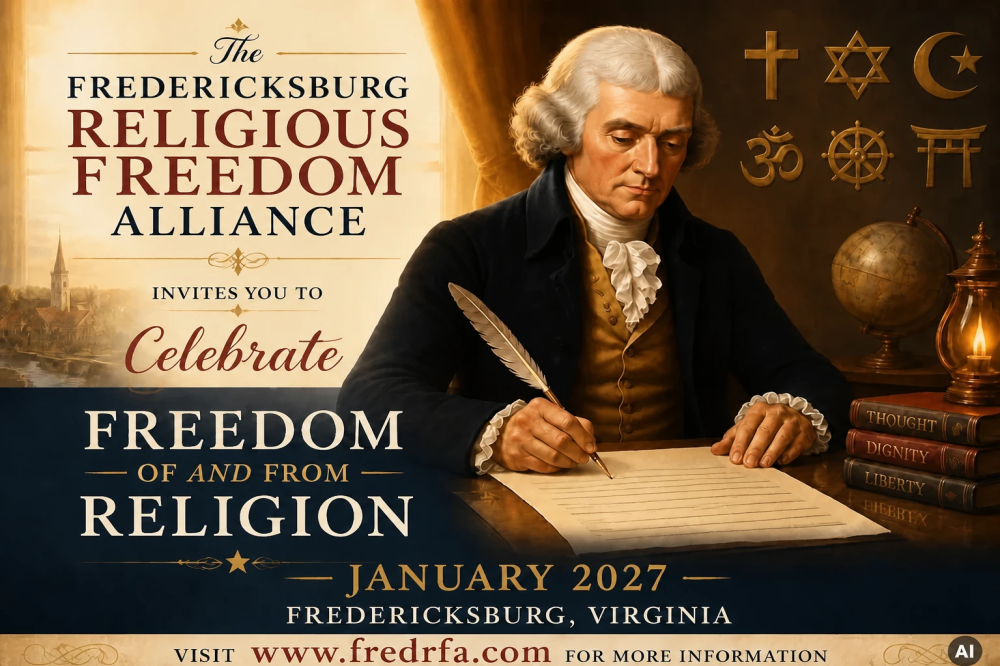
Jefferson’s time in Fredericksburg in 1777 resulted in one of the most significant documents ever put forth in the annals of this country’s history. His selection of the small yet bustling town on the banks of the Rappahannock River says much for its welcoming atmosphere. The January days the committee spent at the tavern, contemplating the fulfillment of their task while taking time to enjoy their surroundings, says much for the hospitality of the town. The fact that Jefferson was a visitor on more than one occasion reinforces his affinity for the city and its people. The legacy he left behind, as part of the city’s history, is both remarkable and memorable.

The following is a timeline of events:

June 12, 1776: The Virginia Convention adopts the Declaration of Rights, including the sixteenth article, which guarantees citizens the “free exercise of religion.”

October 1776–December 1776: Thomas Jefferson and James Madison successfully advocate for “an act for exempting the different societies of Dissenters from contributing to the support and maintenance of the church as by law established, and its ministers, and for other purposes therein mentioned.”

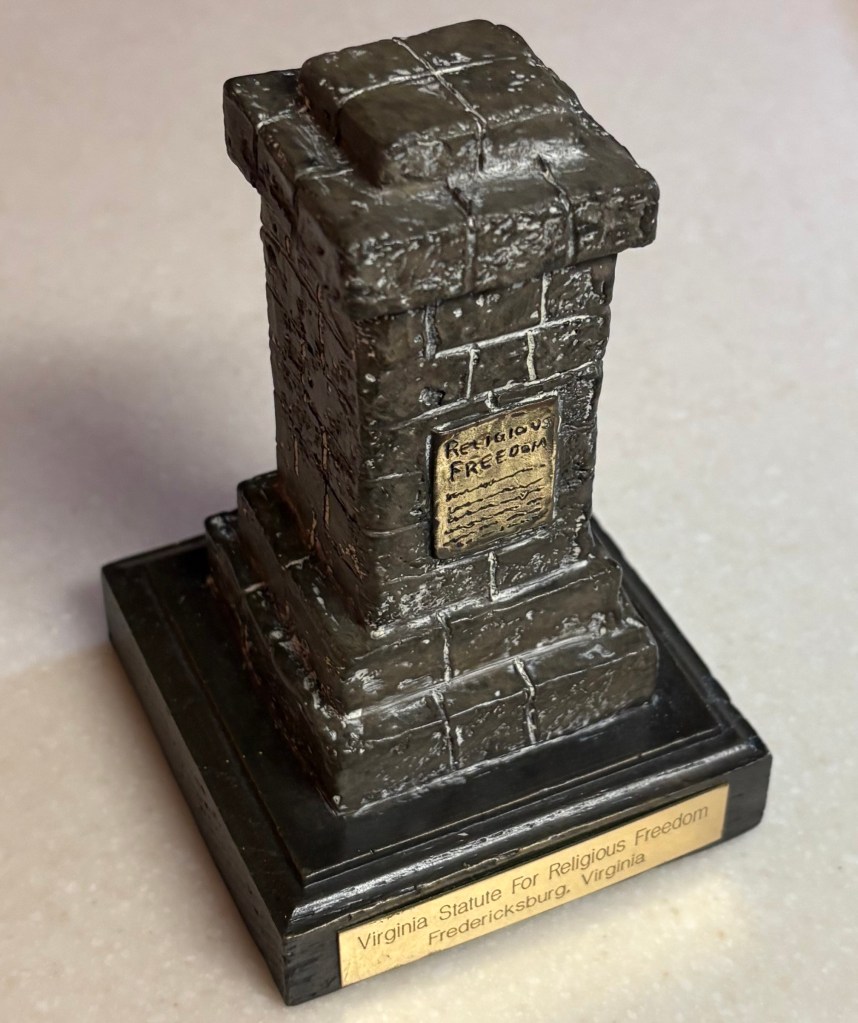
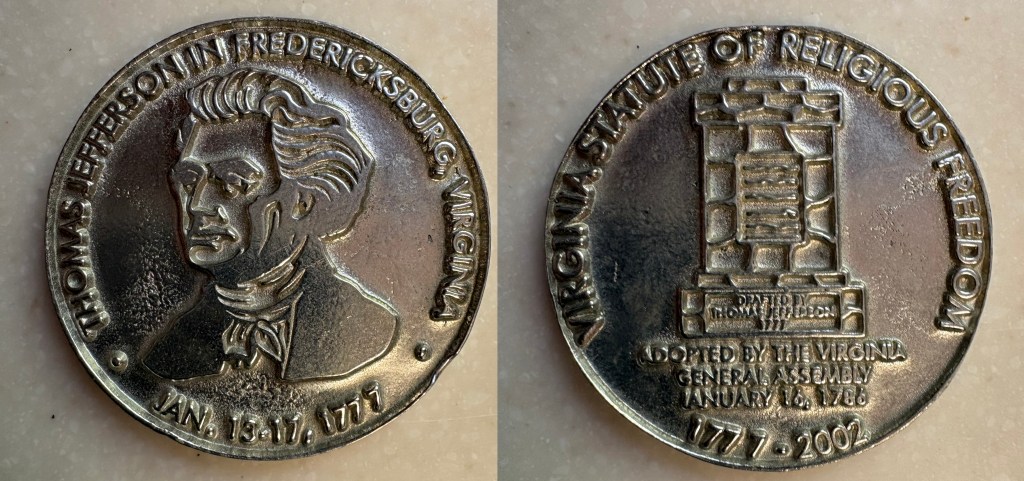
January 13–17, 1777: Thomas Jefferson travels to Fredericksburg and drafts a bill “for establishing religious freedom” as part of an effort to revise Virginia’s colonial laws in order to remove vestiges of monarchy and align them more closely with the state’s republican principles and its new independent status.

June 12, 1779: Because Thomas Jefferson had since been elected governor, John Harvie introduces Jefferson’s bill “for establishing religious freedom” to the House of Delegates. It is eventually tabled.

November 11, 1784: The House of Delegates adopts a resolution supporting “a moderate tax or contribution, annually” to benefit all Christian sects. The resolution eventually fails.

June 20, 1785: James Madison anonymously authors his Memorial and Remonstrance Against Religious Assessments, a broadside in opposition to a resolution by the House of Delegates to levy a general assessment to benefit all Christian sects.

October 31, 1785: James Madison reintroduces to the House of Burgesses 117 bills from an earlier effort to revise Virginia’s laws. Among these is Thomas Jefferson’s bill “for establishing religious freedom.”

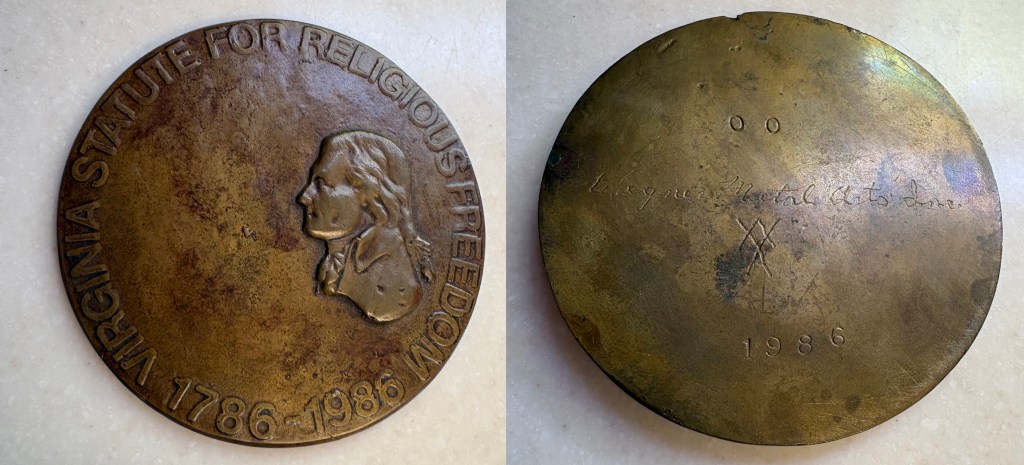
January 16, 1786: The general assembly passes the Bill for Establishing Religious Freedom. Written by Thomas Jefferson and championed in the House of Delegates by James Madison, the bill effectively severs the connection between church and state.
Jefferson and the Quran

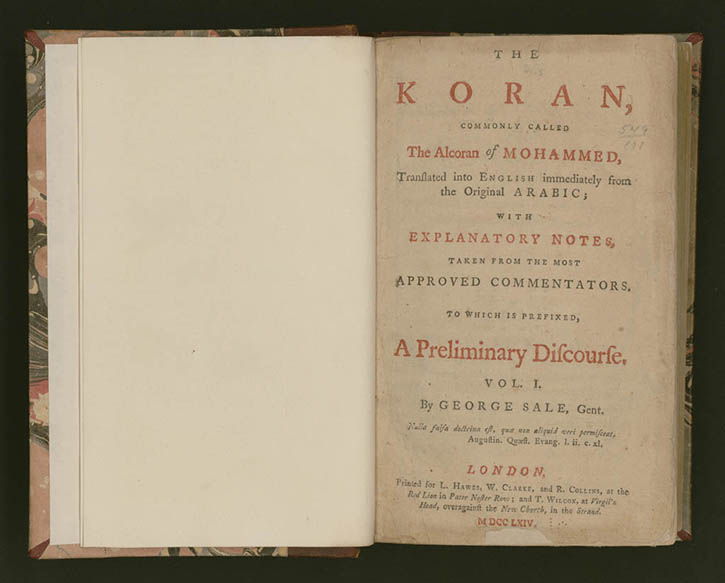
The Christian Bible was not the only religious tome to experience Thomas Jefferson’s examination. His vast collection of books contained many on religion. The Virginia Gazette, a newspaper from Williamsburg, served as a bookseller and sold Jefferson a two-volume set of the Quran in October of 1765.

It was titled “The Alcoran of Mohammed.” George Sale had translated it in 1734 from Arabic to English. In his introduction, Sale wrote that the purpose of the book was to help Protestants understand the Quran so that they could argue against it. He wrote:

“Whatever use an impartial version of the Korân may be of in other respects. It is absolutely necessary to undeceive those who, from the ignorant or unfair translations which have appeared, have entertained too favorable an opinion of the original, and also to enable us effectually to expose the imposture.”

Jefferson was 22 years-old and had studied law for three years when he obtained the book. Law professors of that time considered the Quran a book of law. Sale expanded on his motives:

“If the religious and civil Institutions of foreign nations are worth our knowledge, those of Mohammed, the lawgiver of the Arabians, and founder of an empire which in less than a century spread itself over a greater part of the world than the Romans were ever masters of, must needs be so.”

To them the Quran represented the ruling precepts of the Ottoman Empire, governing over 25 million people. Jefferson, as well as the Western world at that time, thought that the Quran was the chief representation of Islamic law. He is known to have studied the book, but it did not affect his practicing of law.

Jefferson carried the same anti-Islamic views of his colleagues. He did however, have the opinion that the Trinity and the humanness of Jesus were parallel in Islam. His experiences dealing with Islamic piracy in the Mediterranean Sea during his Presidency caused him to question Islam’s legitimacy as a religion.

In 1786, the United States found that it was having to deal directly with the doctrines of the Muslim religion. The Barbary states of North Africa were using the ports to wage a war of piracy and enslavement against all shipping that passed through the Strait of Gibraltar. Thousands of ships were overtaken, and more than a million Europeans and Americans were sold as slaves. Congress offered an agreement called the Treaty of Tripoli, negotiated by Jefferson, which stated roundly that “the government of the United States of America is not, in any sense, founded on the Christian religion, as it has in itself no character of enmity against the laws, religion or tranquility of Musselmen (Muslims).”

Many considered this to be a secular affirmation that attempted to buy off the Muslim pirates by the payment of tribute. Soon after it was discovered that Ambassador Sidi Haji Abdrahaman, Tripoli’s envoy to London, had extorted money and took slaves. Jefferson later reported to the Secretary of State and to Congress his motive was backed by his religious beliefs:

“The ambassador answered us that [the right] was founded on the Laws of the Prophet, that it was written in their Koran, that all nations who should not have answered their authority were sinners, that it was their right and duty to make war upon them wherever they could be found, and to make slaves of all they could take as prisoners, and that every Mussulman who should be slain in battle was sure to go to Paradise.”

Jefferson’s prejudice against Islam was questionable in some ways. He insisted on a constitution wherein “neither pagan nor Mahamedan (Muslim) nor Jew ought to be excluded from the civil rights of the Commonwealth because of his religion.” Still, to him and his contemporaries the idea of a Muslim president, or even a Muslim citizen, was an abstraction. The first American Muslims who traveled to the country, both free and enslaved, may have numbered in the tens of thousands, but at no time was true equality considered to be accessible.

That said, Jefferson did mention supporting religious freedom for Muslims in writings. He asserted in his autobiography that his original legislation for religious freedom had been intended “to comprehend, within the mantle of its protection, the Jew and the Gentile, the Christian and Mahometan [Muslim], the Hindoo, and Infidel of every denomination.”

The Founder

Dr. Kurt Leidecker, a scholar of comparative religion and chairman of the Thomas Jefferson Institute, presented his own worldwide vision in a letter to the editor in The Free Lance-Star:

The Thomas Jefferson Institute for the Study of Religious Freedom was established by a committee of the Fredericksburg Bicentennial Commission to commemorate a highly significant event in the annals of the United States. The Institute does not prejudge, condemn, accuse or engage in litigation. It fosters understanding of the world-wide problem of religious freedom and thus makes a positive contribution to church and state relationship and the ecumenical problems on the whole. By upholding, therefore, the kind of religious and intellectual freedom envisaged by Thomas Jefferson, George Mason, James Madison and several other men of the Revolution, Virginia can rightfully be proud.

He added the impact Jefferson’s statute had on the country and beyond:

I always say it was a beacon light for people in Europe. In those days they all took their religion seriously—so seriously they would go to war over it. When they came to this country they were relieved of this darkness the religious dogma. The whole attitude in America has contributed tremendously to religious peace in the world.

Throughout the years in a series or as occasional demands, the institute sponsored lectures, seminars, slide showings, movies, excursions, dinners, receptions and dramatic skits. Talks by cultural representatives of different countries illustrated the progress of religious freedom and toleration in their countries.

Several years after the institution’s founding, Dr. Leidecker was presented with an award for establishing the institute, which flourished under his leadership. He was praised in The Free Lance-Star:

To the Editor,

We would like to express deep appreciation to our City Council for the beautifully written and framed Resolution 83-13 which was recently presented to Dr. Kurt F. Leidecker, one of our most distinguished citizens. The resolution expressed gratitude to Dr. Leidecker for establishing in our beloved Fredericksburg, the Thomas Jefferson Institute for the Study of Religious Freedom, Inc. Membership in this institute, which has become worldwide, continues to grow.

Butler Robinson Franklin
Fall Hill

In its declaration, the institute summed up its mission by making the following statement: “The Institute will serve its purpose best if it has the support of all citizens who feel that the ideal for which it was established is not only a good and valid one, but needs constant re-affirmation and application in daily life by every member of the human race.”

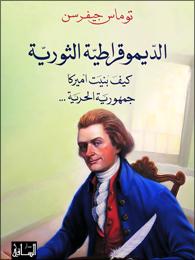
Jefferson in Arabic

جيفرسون للمسلمين

(Arabic translation above: “Jefferson for Muslims”) The memoir of Thomas Jefferson was transcribed in Arabic to reach a new audience, especially the Muslim community. It has a powerful, brief introduction by prominent Arab intellectual Hazem Saghieh, a religious activist and editor of al-Hayat newspaper, which expresses admiration for Jefferson’s political thoughts. It is entitled in Arabic the equivalent of Revolutionary Democracy: How America became the Republic of Liberty.

One reviewer said, “It is beautiful for Lebanese and Arabs to be able to read passages from the texts composed by one of the founders of the United States of America and one of the authors of the Declaration of Independence. It is beautiful for Lebanese and Arabs to be able to read content that will provoke critical discussion, composed by Thomas Jefferson through various stages of his life and career, because texts such as these … are open to the concerns of politics, economy, and public culture . . .” 

A Prestigious Award

The Virginia Knights of Columbus received a prestigious national award for their involvement in a significant parade in Fredericksburg, specifically for the Religious Freedom Parade held in 2002.

National Service Award: The Fredericksburg Council 4034 was honored by the Supreme Council of the Knights of Columbus with the Service Program Award for Community Activity. This was the top national award for community service projects for the year 2002.

The Project: The award recognized the council’s leadership in organizing the annual Religious Freedom Day Parade and ceremony in Fredericksburg. This event commemorates the 1786 passage of the Virginia Statute for Religious Freedom, authored by Thomas Jefferson.

Significance: The 2002 parade was particularly notable as it occurred shortly after the September 11 terrorist attacks, focusing on national unity and the foundational American right to religious liberty.